
Understanding Metal Casting: An Informational Introduction
Defining Metal Casting
Metal casting is the art and science of shaping molten metal by pouring it into a mould made to form a particular shape. Think of it as sculpting with fire, only the clay sets into metal. It is a core manufacturing method because it can produce everything from tiny precision parts to huge, heavy-duty components, with consistent strength and repeatable detail. You get complex geometry without having to cut away an entire block of metal. That saves time, and often money, and sometimes makes the impossible feel quite ordinary.
Versatility and History of Metal Casting
Casting is ancient, older than most written records. Early humans used it for tools, weapons and ornamentation. Over centuries the methods evolved, while the idea stayed simple, pour metal into a mould, let it set, then reveal the part. Today the same basic trick is used to make parts for engines, miners’ gear and building structures. It’s reliable, it’s proven. Sometimes old ways and new machines make a surprisingly good team.
Winton Castings’ Advanced Techniques and Technology
Winton Castings, based in Ballarat, Victoria, brings more than 20 years of hands-on experience together with modern casting equipment. Their services include expert pattern making, repair work, and bespoke casting projects. They balance traditional craftsmanship with up-to-date processes, so customers get parts made to specific needs, not off-the-shelf guessing.
The Metal Casting Process – Step by Step
Pattern Creation
It starts with a pattern, a copy of the final part. Patterns can be wood, plastic or metal. They act as the template that forms the cavity inside the mould. Get this wrong, and the rest is a struggle. Get it right, and the mould practically builds itself.
Mould Preparation
Once the pattern is ready, the mould is prepared by packing sand, metal or ceramic material around it. The mould controls the surface finish and how accurate the casting will be. This step matters more than people realise, because poor mould work shows up later as blemishes, warping or rework.
Melting and Pouring
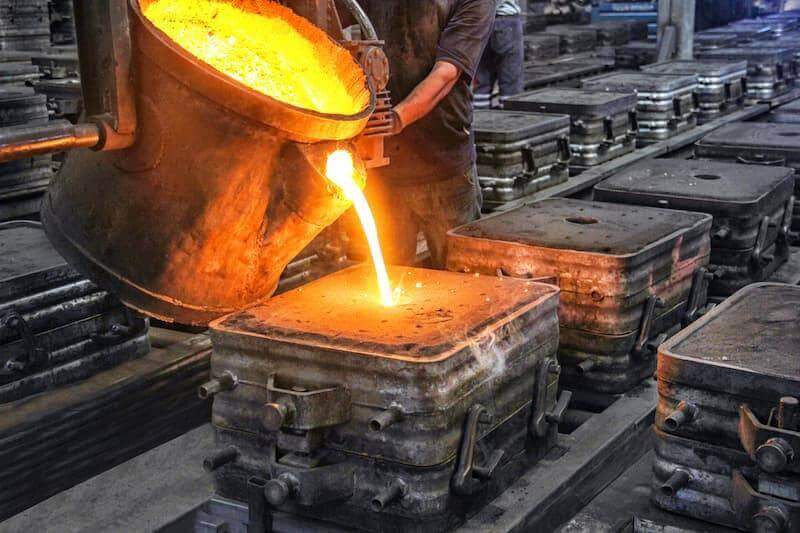
Metals such as aluminium, bronze and cast iron are heated until they become molten. The molten metal is poured into the prepared mould. Temperature control is critical. Too hot or too cold, and you get defects. It sounds simple, and mostly it is, but there are plenty of little tricks that experienced founders keep in their heads.
Cooling and Solidification
After pouring, the metal cools and solidifies inside the mould. Cooling time varies with metal type and casting method, which changes the metal’s microstructure and mechanical properties. Slow cooling often makes stronger parts. Fast cooling can be fine for thin sections. It’s not one size fits all.
Removal and Finishing
When the metal has set, the casting is removed from the mould. Finishing follows, including cleaning, machining, polishing and inspection. These steps make sure the part meets dimensional tolerances and surface finish standards. A casting straight out of a mould is rarely the finished product. There is usually work to make it ready for service.
Types of Metal Casting
Sand Casting
Sand casting uses sand-based moulds and is one of the most flexible methods. It works for complex shapes and is good for low to medium production volumes. It can make very large parts too, so it’s popular in heavy industry. It’s not glamorous, but it gets the job done.
Die Casting
Die casting forces molten metal under high pressure into steel moulds. The result is detailed, uniform parts with excellent surface finish. It is ideal for high volume production where tight tolerances matter. Think of it for automotive parts, consumer electronics, anything that needs to look and fit precisely.
Investment Casting
Also called lost-wax casting, investment casting gives exceptional precision and fine detail. It is suited to parts with complex shapes and demanding dimensional accuracy. Jewel-like detail is possible, but the method scales up for industrial parts too.
Centrifugal Casting
Centrifugal casting spins the mould rapidly while the molten metal is poured in. The spinning forces the metal outward, which helps density and uniformity. It is commonly used for cylindrical parts, pipes and rings that need good internal quality.
Winton Castings’ Expertise in Various Casting Methods
Winton Castings applies these methods depending on what the job requires. They pick the process that fits the size, shape and material of the part. That flexibility means clients get a practical solution rather than a one-size-fits-all answer.
Benefits of Metal Casting
Design Flexibility
Casting allows shapes that are hard or costly to make by machining alone. Internal cavities, undercuts and complex contours become feasible. In short, you can design more freely, then let the mould do the heavy lifting.
Material Versatility
A wide range of metals can be cast, including aluminium, bronze, cast iron, steel and brass. That means you can choose a metal for strength, heat tolerance or corrosion resistance, depending on the part’s role.
Cost Efficiency and Scalability
Casting can be economical for small runs and for larger production batches. The process repeats with low waste, and it saves machining time. That keeps costs down and quality steady, which manufacturers appreciate.
Durability of Metal Casting Products
Cast parts are solid and durable. They cope with heavy loads and tough environments. That’s why casting is common for mining gear, construction hardware and agricultural machinery, places where things get banged about.
Real-World Applications of Metal Casting
Industrial and Mining Equipment
Casting makes many components used in mining and heavy industry. These parts must withstand severe stress and rough conditions. A failed casting in a mine is a problem nobody wants.
Construction Machinery
From structural pieces to precision parts, castings form the backbone of many construction machines. Reliability matters, and castings help deliver it.
Agricultural Components
Cast parts add durability and function to farm machinery. Farming is hard work, and equipment needs to last through long seasons and tough conditions.
Manufacturing Tools and Fittings
Specialist tools, fasteners and fittings are often cast. They provide strength and a good fit, which keeps assembly lines and workshops running smoothly.
Frequently Asked Questions (FAQs)
What Metals Can Be Used in Casting?
Common choices are aluminium, bronze, cast iron, steel and brass. The selection depends on the mechanical properties and performance needs of the finished part.
What Is the Difference Between Sand Casting and Die Casting?
Sand casting uses expendable sand moulds, and is suitable for lower volumes or larger parts. Die casting uses permanent metal moulds for high volume production, offering better accuracy and surface finish.
How Accurate Is Metal Casting Compared to Machining?
Casting provides good dimensional accuracy and surface finish. For very tight tolerances, casting is often followed by machining. The two methods complement each other.
Is Casting Suitable for Custom or Prototype Parts?
Yes. Casting is well suited to custom and prototype parts because it accepts a wide range of shapes, sizes and materials. You can get a working part without starting production tooling from scratch in every case.
Does Winton Castings Provide Machining and Finishing Services?
Yes, Winton Castings offers machining and finishing to make sure parts meet specified dimensions and quality standards. They handle the job from pattern to final inspection.
Explore Winton Castings’ Expertise in Metal Casting
Winton Castings blends traditional skills with modern equipment to deliver precision cast metal components across Australia. Their team makes patterns, repairs existing castings and produces bespoke solutions that match the project brief. If you have a component that needs to last, or a one-off prototype that must work, contact Winton Castings to talk through the possibilities.
